
Bitcoin: The Latest Price, News, and What's Next
Trump's Bitcoin Plunge: A Temporary Dip Before the Digital Gold Rush?
The cryptocurrency world is reeling. Bitcoin, once soaring at an all-time high of $126,000, has plummeted to around $87,000. For those of us who see the transformative potential of blockchain, it’s a worrying dip, sure, but is it a sign of something deeper? Or is it just a temporary setback on the road to a decentralized future? Some analysts, like Paul Krugman, are quick to tie Bitcoin’s woes to Trump's political sway, dubbing it "the unraveling of the Trump trade." (Economist Paul Krugman says Bitcoin’s crash shows the ‘unraveling of the Trump trade’ - Fortune) But I think that’s an incredibly short-sighted view.
Beyond the Headlines: Understanding the Real Forces at Play
Yes, Trump's policies have undeniably influenced the crypto market. His administration's initial embrace of crypto investors, the pardoning of figures like Binance founder Changpeng Zhao, and even the push for a government Bitcoin reserve—all of these factors contributed to the cryptocurrency's surge. And let's not forget the American Bitcoin mining company backed by his sons, which debuted on the Nasdaq with a staggering $5 billion valuation. But to reduce Bitcoin's trajectory to mere political winds is to ignore the fundamental forces driving its adoption.
Remember the dot-com bubble? Companies with flimsy business models saw their stock prices skyrocket, only to come crashing down when the hype faded. But the internet itself didn’t disappear. It evolved, matured, and ultimately reshaped our world. I believe we're seeing something similar with Bitcoin. The initial frenzy, fueled by speculation and political tailwinds, is giving way to a more sober assessment of its long-term value. And that’s healthy.
What's truly exciting is the underlying technology. Blockchain offers transparency, security, and decentralization—qualities that are increasingly valuable in a world grappling with data breaches, financial instability, and a growing distrust of centralized institutions. Imagine a future where our financial transactions are secure, transparent, and free from the control of governments or corporations. Imagine a world where artists can directly monetize their creations, where supply chains are fully traceable, and where digital identities are secure and self-sovereign. That’s the promise of Bitcoin, and that promise is far bigger than any single politician or policy.
The recent executive order allowing U.S. citizens to invest retirement savings in cryptocurrency is a big move, but I think there’s a bigger picture here. How will this affect everyday people? Will it democratize access to alternative assets, or will it create new risks for unsuspecting investors?
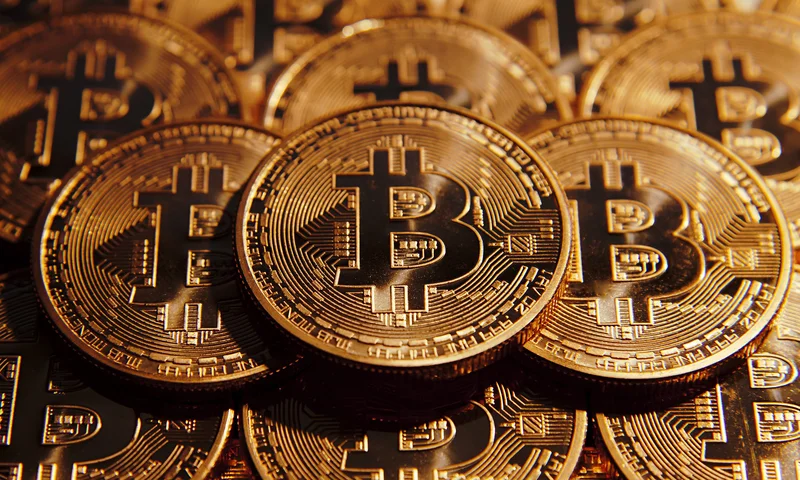
Of course, this transition won't be without its challenges. There’s the volatility, the regulatory uncertainty, and the ongoing debate about Bitcoin's environmental impact. And let's be honest, the sheer complexity of blockchain technology can be daunting for the average person. But these are hurdles, not insurmountable barriers. We need smart regulations, innovative solutions to address energy consumption, and educational initiatives to empower individuals to navigate the crypto landscape responsibly.
The Real Opportunity: Building a Decentralized Future
Here's where I get really excited—it’s the potential for innovation. The Bitcoin crash, while painful for some, presents a unique opportunity to build a more robust, sustainable, and equitable crypto ecosystem. It’s a chance to move beyond the hype and focus on developing real-world applications of blockchain technology. Think about decentralized finance (DeFi) platforms that offer accessible and transparent financial services to underserved communities. Think about blockchain-based voting systems that ensure fair and secure elections. Think about decentralized data storage solutions that protect our privacy and prevent censorship.
When I first started researching blockchain, I was honestly overwhelmed by the technical jargon. But the more I learned, the more I realized that this technology has the potential to transform not just our financial systems, but virtually every aspect of our lives. It's a paradigm shift, a fundamental rethinking of how we organize and interact with the world around us.
The fact that the Trump family has lost a billion dollars in this selloff (according to Bloomberg) is just noise. The real story is the growing community of developers, entrepreneurs, and visionaries who are working tirelessly to build a decentralized future. They are the ones who will ultimately determine the success of Bitcoin, not the whims of politicians or the fluctuations of the market.
This is Just the Beginning
Instead of panicking about the Bitcoin plunge, let's focus on the incredible potential of blockchain technology. Let's work together to build a future where digital assets are accessible, secure, and empowering for everyone. The road ahead may be bumpy, but the destination is worth fighting for. The future of finance, the future of data, the future of trust—it's all being built right now, one block at a time.