
VIX: What it is, today's levels, and its true market signal
Title: Beyond the Hype: Decoding the VIX's Wild Ride and What It Really Means for Your Portfolio
The VIX, Wall Street's favorite "fear gauge," has been making headlines again. But what's noise, and what's a genuine signal? Let's cut through the chatter and look at the data.
A November to Remember (or Forget?)
The recent spike in the VIX is undeniable. One report notes a 50% jump in November alone, marking only the 11th time in history it's risen that dramatically. That's a headline grabber, sure, but context is key. The article points out that the VIX reached 27.8 on Thursday before closing around 26.3. It's the highest point since April, when Trump’s “Liberation Day” tariffs triggered a global market meltdown.
Now, let's be clear: comparing this to the tariff crisis is a bit of a stretch. Back then, the VIX peaked at 52.33 on April 8. We're nowhere near that level of panic. This most recent climb is significant, but it's not apocalyptic. The article also mentions that the VIX remained elevated but slipped 4% to 25.30 on Friday.
The real question is, why the jump? The report cites concerns about stock valuations, particularly among U.S. tech giants, and uncertainty around Federal Reserve policy. Even Nvidia’s blockbuster earnings couldn’t calm nerves, as investors questioned whether AI-fueled gains had outpaced reality. It suggests that investors are questioning whether AI-fueled gains have outpaced reality. It's a fair point, given the frothy valuations we've seen in some corners of the market.
The Univision/YouTube TV Blackout: A Distraction?
Amidst all of this, there's another story floating around: the Univision/YouTube TV blackout. For 56 days, Univision and other Spanish-language networks were off YouTube TV due to a disagreement over pricing. (Google claimed Univision sought price increases "drastically out of line with viewership.") The article notes that even Donald Trump weighed in, urging Google to let Univision back on the service. The two companies have reached an agreement that restores Univision to YouTube TV. Univision Returning to YouTube TV After Nearly Two-Month Blackout
But how does this relate to the VIX? Honestly, probably not much directly. It's more of a side note in the broader market narrative. However, it does highlight the ongoing tension between content providers and streaming platforms, which could indirectly contribute to market volatility if these disputes become more frequent and acrimonious.
A "Perfect Storm" or Just a Squall?
The original article concludes by saying that the market must first find its footing in a landscape where tech valuations, interest rates, and geopolitical risks are creating a “perfect storm” of uncertainty. But is it really a "perfect storm," or just a typical market correction?
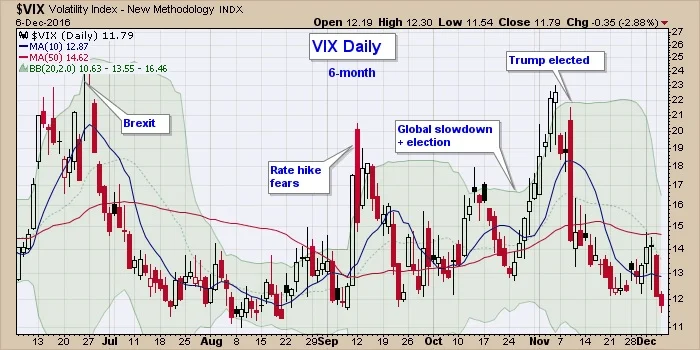
History suggests the latter. The article itself notes that extreme VIX spikes rarely last. The April tariff crisis saw the VIX drop from above 50 to below 20 in less than 100 days. Data shows that when the VIX jumps more than 50% in a month, the S&P 500 typically struggles initially but posts average gains of nearly 9.5% a year later. Now, that's not a guarantee of future performance, of course (past performance is never a guarantee of future results), but it does provide some perspective.
I've looked at hundreds of these market reports, and one thing that stands out is the tendency to overstate the level of risk. It's good for clicks, but not always good for investors. The truth is, volatility is a normal part of the market cycle. Trying to time the market based on short-term VIX spikes is a fool's game. The VIX measures expected 30-day volatility in S&P 500 options, essentially tracking how much investors will pay to protect against market swings. Readings above 20 signal heightened anxiety; readings above 40 often mark crisis points.
Don't Panic, But Don't Be Complacent
The VIX is a useful tool, but it's not a crystal ball. A high VIX doesn't automatically mean the market is going to crash. It simply means that investors are more anxious. That anxiety might be justified, or it might be overblown. The key is to stay calm, do your research, and don't make rash decisions based on fear.
A Short-Term Blip on the Radar?
The data suggests that the recent VIX spike is more likely a short-term blip than the beginning of a major market meltdown. But that doesn't mean you should ignore it. It's a reminder that the market can be unpredictable, and it's always a good idea to be prepared for volatility. Revisit your portfolio, make sure you're comfortable with your risk tolerance, and consider rebalancing if necessary.
So, What's the Real Story?
The VIX is doing what it's supposed to do: reflecting market uncertainty. But let's not mistake a barometer reading for an actual hurricane.