
Mercy Ships: Charity Rating, Scandal, and Controversy Explained
Title Fulfillment:
Generated Title: Mercy Ships' $2.5M Goal: More Than Just a Number?
Alright, let's dive into this Mercy Ships fundraising drive. The headlines scream "record haul," and the maritime community is patting itself on the back. But is this $2.5 million target really something to celebrate, or is it just another feel-good number masking a more complex reality?
The Raw Numbers
First, the facts. Mercy Ships’ Cargo Day is aiming for $2.5 million this year, up from $2.2 million last year. That's a 13.6% increase. Not bad. They've raised around $15 million since 2016. Solid, consistent growth.
The money goes towards surgeries (cataract, cleft lip, orthopaedic) and medical training programs in Africa. No argument there; those are worthwhile causes. They're also building a second hospital ship, the Africa Mercy II, sister to the Global Mercy. The new ship is 174 meters long and will house six operating rooms and a whole lot of beds: 98 acute care, 86 low care and 7 ICU/isolation beds. A serious upgrade in capacity. The first steel was cut October 29th, marking the official start of construction.
But let’s put these numbers in perspective. The Africa Mercy II will accommodate 644 volunteers and medical professionals. A big ship, no doubt. But the MSC Foundation is the main sponsor of the newbuilding project.
The article mentions that Deltamarin is responsible for the vessel’s concept design, in close cooperation with Mercy Ships, and for the preparation of approval design documentation for the yard. But what was the cost of the Global Mercy? And what is the projected budget for the Africa Mercy II? Details on the overall cost of these projects are surprisingly scarce. We're talking about a hospital ship with state-of-the-art facilities. That doesn't come cheap.
The Webb Factor
The fundraising campaign has particular emotional weight because it's the 10th anniversary of Cargo Day, which was the original idea of the late Tim Webb of BRS. As the article notes, he persuaded tanker charterers to offer “Mercy Cargoes” and encouraged brokers to donate 50% of their commission, with charterers matching the effort. What started as a tanker market initiative has since expanded across dry bulk, shipowners, shipbuilders, terminals, agents, suppliers, and service providers, many of whom now run their own fundraisers or pledge fixed amounts. Record haul on the cards as Mercy Ships’ Cargo Day builds toward landmark total
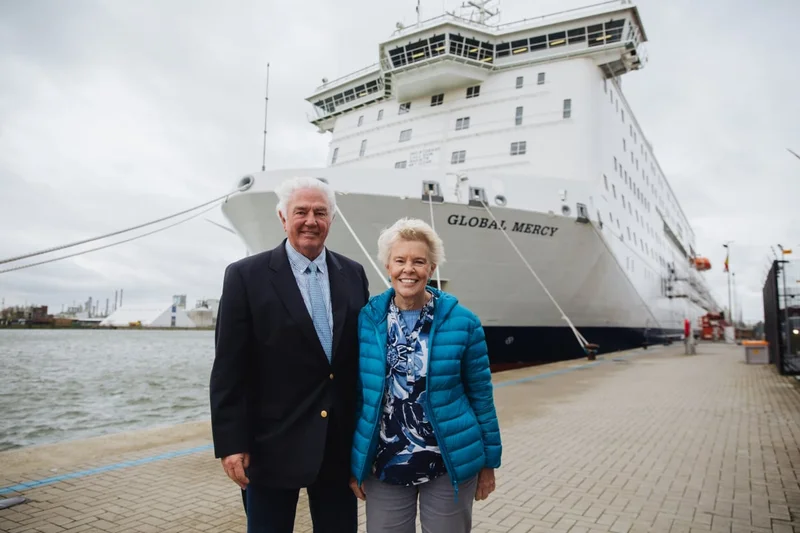
This is where I start to get a bit skeptical. (And this is the part of the report that I find genuinely puzzling.) The article mentions over 150 companies have participated since the initiative began. That sounds impressive, until you consider the size of the global maritime industry. How many companies didn't participate? What percentage of total freight commissions are we talking about here? Is this $2.5 million a drop in the bucket, or a significant contribution?
And here's my methodological critique. The press release highlights the fundraising total, but it doesn't provide any context about the effort required to reach that number. Did they spend $500,000 on marketing and administration to raise $2.5 million? What are the overhead costs? The lack of transparency raises more questions than answers.
A Dollar Amount Versus Impact
Let's assume, for the sake of argument, that Mercy Ships is a perfectly efficient organization, funneling every dollar directly into surgeries and medical training. Even then, the question remains: what is the actual impact of this $2.5 million? How many surgeries? How many healthcare workers trained? What are the long-term outcomes? The press release offers feel-good anecdotes, but lacks hard data.
The article states that the funds support thousands of free surgeries each year. But what is the definition of "thousands?" Is it 2,000? 9,000? The range is too wide to be meaningful. And, crucially, what's the cost per surgery? We need to know the ROI on these donations to determine whether this is truly effective philanthropy or just a well-marketed feel-good campaign.
Plus, there is the question of the new ship. While it is designed to expand access to free surgical care and medical training across Africa, it will also require enormous sums to operate. How will Mercy Ships ensure that it can sustain its operations over the long term?
The Real Cost of Good Intentions
Ultimately, the $2.5 million goal is just a number. It's a milestone, sure, but it doesn't tell the whole story. We need more data, more transparency, and more context to determine whether Mercy Ships is truly maximizing its impact. Until then, I remain cautiously skeptical.