
VIX: What's Driving Its Current Price and the Real Market Signal
The VIX Awakens: A Data Dive into November's Jitters
The Cboe Volatility Index (VIX), Wall Street's favorite anxiety gauge, threw a bit of a tantrum in November. On November 21st, 2025, it spiked to 27.8 before settling around 26.3. That's the highest it's been since April, when Trump's "Liberation Day" tariffs sent it into the stratosphere (above 50, if you recall). This recent jump represents a 50% increase, making it only the 11th time in history we've seen that kind of volatility surge in a single month. The following day, the VIX cooled off slightly, dropping 4% to 25.30, but it's still elevated.
So, what's got the market spooked? Apparently, concerns about stock valuations, particularly among the tech behemoths we all know and love, and the ongoing will-they-won't-they dance with Federal Reserve rate cuts. Money markets are currently pricing in a 73% chance of a December rate cut after some dovish murmurs from New York Fed President John Williams. That's a pretty high probability, but probability isn't certainty.
Tech's High-Wire Act and the Fed's Tightrope Walk
Wall Street's been whispering about stretched valuations for a while now, especially in the tech sector. Investors are starting to wonder if the AI-fueled rocket ship has flown a little too close to the sun, even after Nvidia's (NVDA) blockbuster earnings. Is the market finally starting to question whether these gains are sustainable? Or is this just a temporary blip before we resume our climb? I've looked at hundreds of these earnings reports, and the level of AI hype in the "forward guidance" sections has been… noticeable.
The VIX, for those who need a refresher, measures the expected 30-day volatility in S&P 500 options. A reading above 20 generally signals heightened anxiety, and above 40, well, that's usually crisis territory. We hit 52.33 back in April after the tariff announcement. The previous high before that (excluding the tariff spike) was in mid-October, around 25.31. The stock market’s ‘fear gauge’ spiked to its highest level since Trump’s ‘Liberation Day’ tariffs caused a global selloff - Fortune
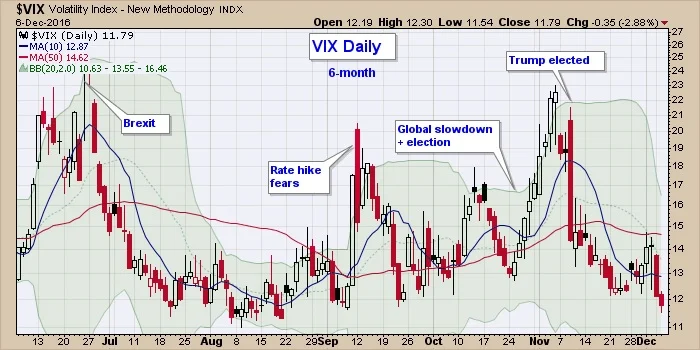
Now, here's where things get interesting. Historically, when the VIX jumps more than 50% in a month, the S&P 500 tends to struggle initially. However, a year later, it typically posts average gains of nearly 9.5%. That's better than the historical annualized average of around 8%. So, does this mean we should be loading up on stocks now, betting on a future rebound? Not so fast.
The Historical Echo Chamber
That 9.5% figure is an average. Averages can be misleading. What's the standard deviation? What were the specific conditions surrounding those previous VIX spikes? Were they driven by geopolitical events, economic recessions, or something else entirely? The data doesn't specify, but it's important to remember that context matters.
Here's the part of the analysis that I find genuinely puzzling. The market rallied 42% from its April lows. A 42% rally implies a significant risk appetite. Are investors truly worried about valuations, or are they just taking profits after a massive run-up? Or, perhaps more cynically, are they saying they're worried to justify a bit of portfolio trimming? The narrative and the numbers don't quite align.
And let's not forget the Fed. The market is practically begging for a rate cut, fueled by those "dovish" comments from the New York Fed. But the Fed has been consistently signaling its commitment to fighting inflation, even if it means sacrificing some economic growth. Is the market misinterpreting the Fed's signals? Or is the Fed subtly preparing the ground for a policy shift?
So, What's the Real Story?
The VIX spike is a symptom, not a disease. It reflects underlying anxieties about valuations and monetary policy, but it doesn't necessarily portend a market crash. The historical data offers some reassurance, but it's crucial to remember that past performance is never a guarantee of future results. Ultimately, the market's next move will depend on a complex interplay of factors, including earnings, economic data, and the Fed's actions. And, of course, the unpredictable whims of the market itself.